
 January 30, 2026
  4 Min
4 Min  No Comment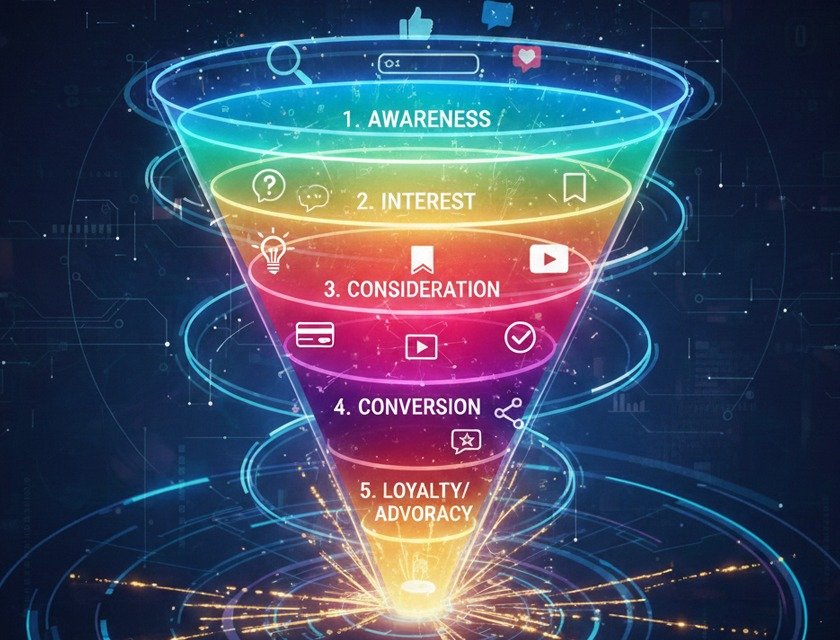
Digital marketing has completely changed the methods which companies use to bring in customers and keep them engaged until they make a purchase. Brands today use digital platforms to create guided experiences which help customers discover their products instead of relying solely on direct sales for customer acquisition. Customers use every website interaction they make to determine which products they will buy. The digital marketing funnel establishes a structured customer journey which businesses need to master for their online operations to succeed.
Through understanding this funnel businesses can develop precise marketing tactics which will connect with their ideal customers at the right moment.
What Is a Digital Marketing Funnel?
A digital marketing funnel shows how customers move from first discovering your brand until they become your loyal customers. The system shows how users interact online through different platforms and multiple online sessions by tracking their behavioural and psychological development stages.
The best digital marketing institute in Kerala teaches this basic principle because it helps marketers develop effective promotional campaigns which move beyond random advertising methods.
Digital Marketing Funnel Stages Explained
1. Discovery Stage
The discovery stage serves as the initial point at which potential customers discover your brand. The brand becomes visible to users through Google search results or social media posts or display ads or referrals. Users at this stage conduct searches for solution-based answers to their complaints while remaining unaware of your brand’s existence.
The combination of SEO and paid advertising and social media access creates crucial business pathways. The business tracks new visitors and impressions and ad clicks and unbranded keyword rankings as its key performance indicators.
2. Interest (Engagement Stage)
People who enter your website reach the interest stage after they arrive. Users explore your brand’s offerings through their exploration of articles, landing pages, videos and other resources.
High-quality content is vital in this stage. Brands should teach users about their products while solving their problems instead of making aggressive sales pitches. The metrics such as time on site, page views, downloads and email subscriptions help measure success. The digital marketing course in Kochi places strong emphasis on this stage because content and UX directly affect how users advance through the sales funnel.
3. Appraisal (Evaluation Stage)
Users begin to evaluate your brand when they reach this stage. Users research competitors by reading reviews and checking testimonials and visiting third-party sites and assessing pricing and service options.
The business requires an excellent online reputation and uniform brand identity and customer validation through social proof. Case studies, customer endorsements and PR mentions and active social media profiles help build credibility and trust during this phase.
4. Confirmation Stage
In this stage, customers are almost ready for conversions. These returning users need to see proof that they are making the best decision. Conversion-focused landing pages along with detailed case studies and transparent communication and clear value propositions work together to guide users toward taking action. The best marketing course in Kerala teaches optimisation techniques which marketers should use to improve their results at this particular stage.
5. Conversion (Action Stage)
The user reaches the conversion point when they make a purchase or submits a lead form or contact the sales team. The website needs to provide users with an easy experience while it accomplishes fast loading times and presents distinct calls to action. Post-conversion engagement activities which include follow-up emails and customer support together with relationship-building strategies work to transform first-time customers into loyal brand advocates.
Why is the Digital Marketing funnel Important
The Digital Marketing Funnel provides organisations with vital advantages which benefit their SEO efforts while fueling their business growth. A well-optimised digital marketing funnel improves lead quality while decreasing marketing waste and boosting conversion rates. The SEO process ensures that content matches user search intent throughout the three stages of awareness, consideration and decision-making. This process results in improved rankings and better user engagement.
Conclusion
Digital marketing funnels serve as the essential framework which supports all successful online advertising campaigns. Businesses need to learn how users find and assess brands because this knowledge enables them to develop websites which create valuable digital experiences that turn visitors into dedicated customers. The funnel serves as an essential skill for all digital marketers in this competitive sector. Professional training programs help you develop effective skills which you can use to implement real-world campaign strategies.
To become a confident and skilful digital marketer, join Storycat’s AI-Integrated Digital Marketing Course today!