
 February 21, 2026
  7 Min
7 Min  No Comment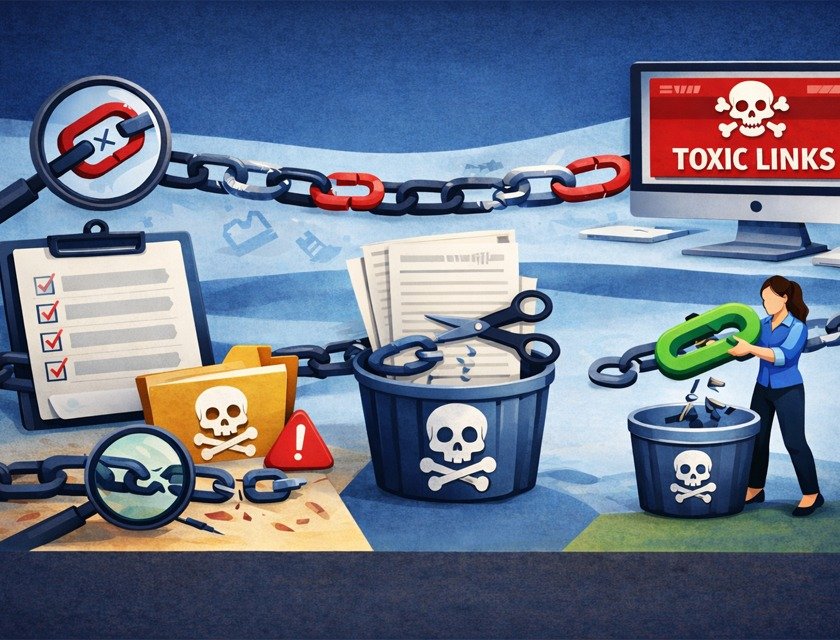
Backlinks are still one of Google’s strongest ranking signals but not all links are good news. While high-quality, relevant backlinks can boost your visibility, toxic backlinks can silently drag your website down. These harmful links often come from spammy sources, link schemes, or outdated SEO tactics that no longer work. If ignored, they can trigger algorithmic drops or even manual penalties.
If you’re learning SEO at a Digital Marketing Institute in Kerala or working with a Digital Marketing Institute in Kochi, backlink auditing is one of the first real-world skills you’ll encounter and for good reason. Let’s break down how to identify bad links and remove them safely without hurting your rankings.
What Are Toxic Backlinks?
Toxic backlinks usually come from low-quality or manipulative sources. Common examples include:
- Link networks created only to pass SEO value
- Site-wide or footer links repeated across hundreds of pages
- Blog comments and forum signatures with keyword-rich anchors
- Web directories and article directories with thin or duplicated content
- Over-optimised anchor text, especially exact-match commercial keywords
These links don’t reflect genuine recommendations. Instead, they send red flags to search engines, making your backlink profile look unnatural.
Step 1: Audit Your Backlinks
Start by pulling your backlink data from tools like Google Search Console, Ahrefs, Semrush, or any backlink analysis platform. Look for patterns rather than single links. Warning signs include:
- A large number of links from unrelated or spammy websites
- Many links from the same domain (site-wide links)
- Sudden spikes in backlinks within a short period
- Too many links use exact-match keywords
A healthy profile usually has a mix of branded anchors, natural phrases, and links from relevant sites within your niche.
Step 2: Manually Review Suspicious Links
Tools can flag risky links, but human judgment matters. Visit suspicious linking pages and ask:
- Does this site look legitimate and maintained?
- Is the content relevant to your niche?
- Does the link appear naturally placed within the content?
- Is the page filled with outbound links to random websites?
If a page looks auto-generated, irrelevant, or purely made for SEO manipulation, it’s likely toxic.
Step 3: Try Removing Links at the Source
Before jumping to disavowal, try the clean approach:
- Find the website’s contact details
- Politely request the webmaster to remove the link
- Give it 1–2 weeks for a response
Not all webmasters reply, but even removing a portion of harmful links manually improves your backlink quality.
Step 4: Disavow What You Can’t Remove
When removal isn’t possible, use Google’s Disavow Tool carefully. Create a list of toxic URLs or domains and submit it through Search Console. This tells Google to ignore those links when assessing your site.
Don’t reject links blindly. Removing good links by mistake can harm your rankings. When in doubt, review carefully or consult an SEO expert.
Build a Cleaner Link Profile Going Forward
The best way to avoid toxic backlinks is to stop chasing shortcuts. Focus on:
- Publishing genuinely useful content
- Earning links through PR, partnerships, and mentions
- Collaborating with relevant brands and creators
- Keeping anchor text natural and diverse
Modern SEO is about trust and relevance, not about volume.
Final Thoughts
Toxic backlinks don’t always hurt overnight, but over time, they weaken your site’s credibility. Regular backlink audits, smart cleanup, and ethical link-building practices help protect your rankings and build long-term growth. Whether you’re a beginner learning at a Digital Marketing Institute in Kerala or refining strategies with a Digital Marketing Institute in Kochi, mastering backlink hygiene is a skill that pays off for every website you manage.
—-
Backlinks continue to function as one of Google’s most important ranking factors because not all links provide positive outcomes. The presence of high-quality backlinks which match your content will improve your website visibility whereas toxic backlinks will damage your site without detection. The dangerous links that create this problem originate from three sources which include spammy websites and link schemes and discontinued SEO methods. The algorithms will generate automatic drops because the content needs to be treated as specific to search engines.
Backlink auditing serves as the first practical skill which students acquire through their Digital Marketing Institute education in Kerala and their Digital Marketing Institute work experience in Kochi. Let us explain the process which helps you find harmful links and remove them from your website without damaging your search engine position. What Are Toxic Backlinks? Toxic backlinks usually come from low-quality or manipulative sources.
Link networks created only to pass SEO value
Site-wide or footer links repeated across hundreds of pages
Blog comments and forum signatures with keyword-rich anchors
Web directories and article directories with thin or duplicated content
Over-optimised anchor text, especially exact-match commercial keywords
These links don’t reflect genuine recommendations.Your backlink profile appears unnatural to search engines because these links create red flags.
The audit process starts with backlink data which you need to extract from Google Search Console and Ahrefs and Semrush and any backlink analysis platform. The investigation should focus on finding patterns instead of examining single links. The following elements serve as warning indicators:
A large number of links from unrelated or spammy websites
The website contains multiple links which lead to the same domain
The website experiences sudden increases in backlinks that occur between short time intervals
Too many links use exact-match keywords
A healthy profile usually has a mix of branded anchors, natural phrases, and links from relevant sites within your niche. The process demands direct examination when suspicious links need assessment. The system identifies dangerous links through its detection system but assessment requires human evaluation. The suspicious linking pages need examination through this process which requires answering these questions:
Does this site look legitimate and maintained?
Does the content match your specific industry requirements?
Does the link appear naturally placed within the content?
The page contains excessive outbound links which direct users to various random websites.
A page becomes toxic when it shows signs of automatic generation and irrelevant content and exists solely for search engine optimization purposes.
the process requires you to first delete all website links before you start disavowal work. The contact information of the website needs to be located. The webmaster should remove the link after you make a polite request. The waiting period for a response should take 1 to 2 weeks. Backlink quality improves through manual deletion of harmful links even though not all webmasters respond to removal requests.
Step 4 requires you to disavow all links which you cannot delete.
The Google Disavow Tool functions as a tool to use when you cannot delete specific links. The Search Console needs you to create a list of toxic URLs or domains which you will submit through the platform. The links need to be treated as non-existent by Google during their assessment of your website. The process of link rejection requires you to assess each link individually. The process of link removal leads to accidental deletion of beneficial links which negatively impacts your website rankings. The process requires you to carefully review material or ask for SEO expert assistance when you feel uncertain. The process of creating a cleaner link profile depends on your ability to create high quality links for the future.
The best way to avoid toxic backlinks is to stop chasing shortcuts.
The process requires you to
- publish content which provides actual value to users.
The process of earning links requires PR work and partnership development and media mentions.
The process of working with relevant brands and creators needs to be established. The process of maintaining anchor text requires you to keep it natural while using various text formats. Trust and relevance have become the primary focus of modern SEO while volume has lost its importance.